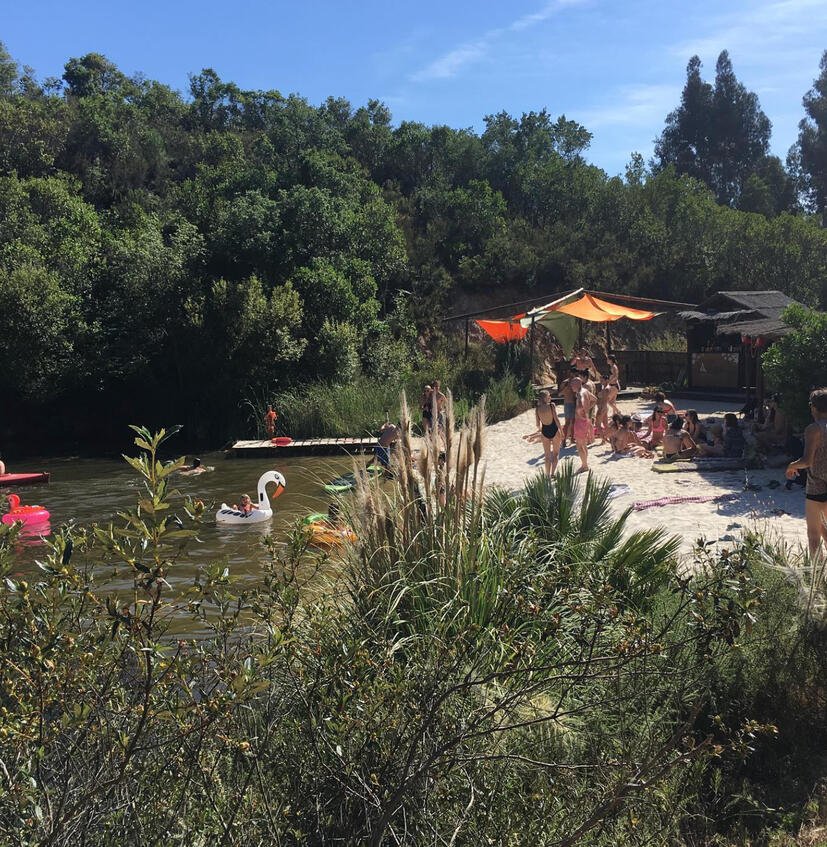
Most cohort pages give you a clean, idealized version of the daily rhythm. Beautiful breakfast, peaceful coworking, golden sunset dinner. We have one of those too, on the Aterra page. It's accurate, but it leaves out the texture, and the texture is a lot of what makes the experience real.
This is what a Tuesday actually feels like. Specifically, a Tuesday in week two, when the rhythm has settled and the family knows the names of the other kids' parents and you've stopped feeling like you're at someone else's house. We picked Tuesday because it's the most representative day. Mondays still have first-day energy. Fridays have weekend anticipation. Tuesday is just life.
6:30 a.m. · first risers
Someone's kid wakes up before everyone. Yours, or someone else's. The someone-else's-kid scenario is one of the small adjustments of cohort life: you hear it, you smile, you go back to sleep, knowing it's not your shift to handle.
The chef is already in the kitchen. Coffee is already brewing. The first family with awake-toddlers wanders down by 7. They're in pajamas. Nobody minds.
8:00 a.m. · slow breakfast
Group breakfast on the long table starts whenever people show up. Buffet style: fruit, bread, eggs, whatever the chef has put together. Kids get themselves food. Parents drink coffee in stages. There's always someone you haven't talked to yet that morning, so you sit next to them.
By 8:45 most families are there. The conversation is gentle. Not many big questions yet. Someone is telling a story about a family of frogs they spotted near the lake yesterday. The kids who finished eating first are already running off toward the kids' program area.
This morning slot is also when you notice things. Whose kid is crying today. Who slept badly. Who's having a tough work week. Within a week of a cohort, parents start noticing each other's days the way you notice family members. It happens without anyone trying.
9:00 a.m. · kids' program starts
The educator (Lorena at Casa Sumapaz, the lead educator we hire at Aterra) gathers the kids by age group. Today's theme: water. The older kids are heading to the lake to do a small experiment about temperature stratification. The younger ones are doing sensory water play in the shaded garden. By 9:10 the kids' world is in motion and the parents' world goes quiet.
9:00 a.m. to 12:00 p.m. · work block
Most parents head to the coworking area. Some take their laptop to a porch. The wifi holds up, most of the time. Headphones go on. Calls happen. Two parents are on the same standup call (different companies, same time zone). They wave at each other from across the room.
The deepest, quietest work of the week happens in this block. Parents who normally fight for focus at home, between school pickups and the dryer needing emptying, now have three uninterrupted hours. They get more done than they expected. They start to notice it by week two.
Around 11, someone's kid runs through the coworking area calling for them. The educator gently steers them back. Five minutes later they've forgotten and are doing something else. Most kids come and go from the program organically; nothing is enforced like a school day. The structure is loose, the trust is high.
12:00 p.m. · lunch
Lunch is the big social meal at most of our cohorts. The chef has put together something local: today, a Portuguese rice dish with seasonal vegetables. The kids eat first or alongside, depending on the energy. The parents take longer, end up in the kind of conversations that don't happen at home: about meaning, about parenting, about how someone navigated a hard career transition.
The first time you have one of these lunch conversations in a cohort, you remember what dinner with friends used to feel like before you had kids and 15-minute weeknight meals became the norm. The cohort gives that back.
1:00 p.m. to 3:30 p.m. · second work block
The second half of work. Energy is lower, but so are demands. Most calls have happened. Now it's the heads-down stretch: writing, designing, building. The kids are in the second half of their program, often more rest-focused (story time, art, free play in the shade). Some parents nap for 20 minutes around 2. The cohort doesn't judge naps.
3:30 p.m. · the cohort wakes up
This is the magic hour. Work blocks close. Kids' program closes. Everyone emerges from wherever they were, blinking, suddenly together again. The next two hours feel like the part of the day the rest was preparing for.
Today's community activity: a guided walk to a small farm down the road. The farmer is going to show the kids how to feed the goats. About half the families go. The other half stay back, swimming, reading, recovering from the day. Both options are normal. Nobody comments on who went and who didn't.
5:30 p.m. · that bit before dinner
The walk-back hour. The light is starting to soften. Kids are dirty in a particular way that only outdoor kids get. Two parents are sitting on the porch with beers. A small child is showing another small child something they found. There is, weirdly, almost nothing happening, and that nothing-happening is somehow the best part of the day.
If you have ever wondered what the rhythm of a "good childhood" felt like in earlier eras (when kids ran around outside until dinner and the adults had time to actually sit), this is approximately that. It's not nostalgic. It's actually present.
6:30 p.m. · dinner together
The big shared dinner. Kids eat at the early sitting; some kids eat with the adults. The food tonight is local: fish from the coast, vegetables from the garden, bread from the village bakery. The conversation is one of those that opens up when everyone is tired but happy. People share stories from their day. Someone's kid made a friend. Someone closed a deal at work. Someone learned that the lake has eels.
Dinner stretches. Some families head off to put little ones to bed. Others stay another hour with whoever's still at the table.
9:00 p.m. · adults-only window
Once the smaller kids are down, a smaller group of adults usually re-gathers. Maybe by the fire, maybe in the lounge. The conversations now are different from breakfast: deeper, slower, sometimes silly, sometimes vulnerable. People talk about their work in real ways. About their marriages. About their kids' challenges. About what they're trying to figure out.
This is the conversation you didn't realize you were missing. The conversation between adults who are no longer performing being parents, who have a kind of professional and life-stage solidarity that you don't get at a regular dinner party because everyone's rushing home.
By 10:30 most people are tired. Tomorrow starts with breakfast at 8 again.
The thing you'd miss in just a week, that you only feel by week three: the rhythm of a day that has actual breath in it. Mornings that are slow. Lunches that aren't rushed. Dinners that don't end at 7:15 because someone has to do bath time alone. The cohort gives the family back the rhythm that modern life took away.
What this isn't
This is one Tuesday. Not every Tuesday looks like this. Sometimes it rains. Sometimes a kid is sick. Sometimes a parent has a brutal work day and skips dinner. Sometimes there's a small interpersonal friction that the facilitator helps work through. The cohort isn't always easy. It's real life in a beautiful container.
But across three cohorts and many Tuesdays, this is the shape that emerges. By the third week, families know that this is what they came for. By the fourth week, they're starting to think about how to bring some of it home with them.
If you want to see the actual cohorts where this rhythm is held, the Casa Sumapaz cohort page and Aterra cohort page describe the specific places. The rhythm is the same in spirit; the texture is different (cloud forest in Colombia, coastal lake in Portugal). Both are real. Both feel like this.